How to Win Homies and Influence Your People
My first author client didn't come from a pitch. I offered to help somebody with some book launch work and video editing because I liked what they were doing and I had the skills sitting around.
That turned into another project, then another, and somewhere in there I built a website for an author, then a few more, and one day I looked up and I was running a marketing agency built around helping people get the most out of the strange, beautiful journey of becoming an author and figuring out what happens after.
None of that was a strategy. It was me being interested in someone doing something I thought was dope, and offering to make it better.
Dale Carnegie figured this out in 1936. How to Win Friends and Influence People is still the book. Be interested in people. Remember their name. Let them talk. Give honest appreciation. Make people feel important and mean it. Ninety years later every rule still works, and almost nobody does them.
But Carnegie didn't have a phone in every pocket. He didn't have a feed where everyone is broadcasting and nobody is listening, or AI that writes a polished pitch in four seconds that sounds exactly like everyone else's polished pitch.
So, for me I wanted to share my version of these principles. This is roughly what my upcoming book will be talking about when it comes to building your personal brand in a new world.
Win Homies
Everybody knows what a homie is. If you don't call your friends that, I need you to go dig up some tapes and CDs and do your 90s and 2000s over again, because you missed something.
But for the record, the word comes from homeboy. Somebody from your home. Your block, your neighborhood, your side of town. A homie was originally someone who came from where you came from. Then somewhere along the way it stopped being about the zip code and started being about the loyalty. Go look it up on Urban Dictionary and every definition says some version of the same thing: a friend shows up for the easy stuff, a homie shows up for the embarrassing stuff, the 3am stuff, the ugly stuff, and is still there the next morning. Family that isn't blood.
A homie used to be someone from your home. Now a homie is someone who feels like home. You're not stuck with the block you grew up on anymore. You get to find your people by what you're into instead of where you're from.
A homie is down for their homie. A homie keeps it real with you, supports you for real, and wants you to win as much as you want them to win. That's the definition, and it hasn't changed since the Walkman.
There are phony homies and there are real homies. There are work homies, club homies, and homies you only know through one shared obsession. Homies be everywhere. Some are far, some are close, some you talk to once a year and pick up exactly where you left off like it's been 24 hours. Some go away. Some aren't homies anymore, and that's okay too. Pretending otherwise is how you end up with 4,000 connections and nobody to call.
Carnegie said a person's name is the sweetest sound in any language. True in his day. Now a CRM remembers names, LinkedIn tells you their birthday, and none of it means anything. A real homie goes further. You don't just know their name. You know what they're into, what gets them talking faster, what they've been building in the garage that they haven't told anyone about yet. No tool can do that for you. And when you finally link up, the whole point is to create some fun for that person, to be surprised by whatever they've got going on and enjoy it right there with them.
He also said to be a good listener and let people talk about themselves. Modern translation: phone face down, let them tell you about the garage project. All of it, don't wait for your turn.
So think about winning differently. Winning a homie doesn't mean collecting them or closing them. It means keeping the connection, at whatever level it lives, with some love and respect in it. A text once a year with love in it beats a hundred likes with nothing behind them.
And there's a catch. If you want good homies around you, you have to be a good person first. Someone who thinks about others and cares how they're doing. Carnegie called it becoming genuinely interested in other people. Everyone's grandmother called it the golden rule. It's old because it works.
Why this is marketing: an author with 40 real homies who each know three people has more launch reach than an author with 5,000 followers who scroll past. Referrals, podcast invites, bulk orders, stages. All of it comes from people who root for you. I've built a whole business on that sentence.
Influence
Nobody wants to be influenced. Everyone wants to be seen.
Carnegie had a whole section on winning people to your way of thinking. Avoid arguments. Never say "you're wrong." Admit your mistakes fast. See it from their side. Good rules, and most of the people quoting them today use them to close deals.
Here's the modern problem. Carnegie warned that flattery is counterfeit and people can smell it. In his day you could get away with it for a while. Now everyone has seen ten thousand "love your content" comments and can spot a template in half a second. AI made it worse. Polished and generic is free now. The only thing left that costs something is being specifically, weirdly yourself.
So flip the motive. The influence I care about is what happens when you've been real with someone long enough that they'd let you tell them the truth. It's earned slowly, and it's earned by being useful before you ever need anything back.
It looks like honest appreciation, which Carnegie called the deepest craving in human nature. Not "love your content." The specific, slightly strange thing you noticed that nobody else says out loud. It looks like talking about your homies well when they're not in the room. Carnegie called that giving someone a reputation to live up to, and he meant it in private. Today you can do it in public. Share their thing. Tag them. Put them on your podcast. It looks like leading with your own mistakes before you point at theirs, and letting them save face when they mess up in front of people.
And it looks like showing up. Reading the book, leaving the review, and texting them at eleven at night because chapter four hit different.
Why this is marketing: trust is the only thing that sells a book, a program, or a seat in the room, and trust is built by being useful before you ask. That's the newsletter you write for three years. That's the 2,000 books I gave away. It's slow, it compounds, and it's the reason the hope-selling industry will never teach it.
Your People
Let me be clear about what I mean here, because the phrase gets used for a lot of things. When I say your people, I'm not talking about your race, your faith, where you grew up, or who you vote with.
I mean the ones who inspire you. The ones who light you up when their name shows up on your phone. The ones who want what's best for you, who challenge you, who will look you dead in the eye and tell you it's the wrong shirt and go brush your teeth before this call.
Carnegie's last rule was to throw down a challenge. He meant it as a motivation trick. I mean it as a description. Your people are the ones allowed to challenge you, because they earned it by wanting you to win.
Your people have similar interests, sure. They show up around your expertise, they get why you do what you do. But it goes further. When they share something, you feel seen. When you share something, they feel seen. And when you talk to them it feels effortless, because it is. They are truly interested in you, and you are truly interested in them, and that's the most important sentence in this whole issue.
Are they business people? Book people? Poetry people, research people, art people, van people? The list goes on and on, and for most of us the answer is a strange little mix that doesn't fit in any audience persona worksheet. Good. Your people aren't a demographic. They're a feeling you get when the conversation starts. That's the modern version of the homeboy. Same block, different map.
Why this is marketing: your expertise is a commodity. There are a hundred coaches with a book on the same thing you wrote about. The person can't be copied. The weird mix of interests that makes your people your people is the same weird mix that makes you memorable. Carnegie would've called it being memorable. This industry calls it a brand.
On the podcast
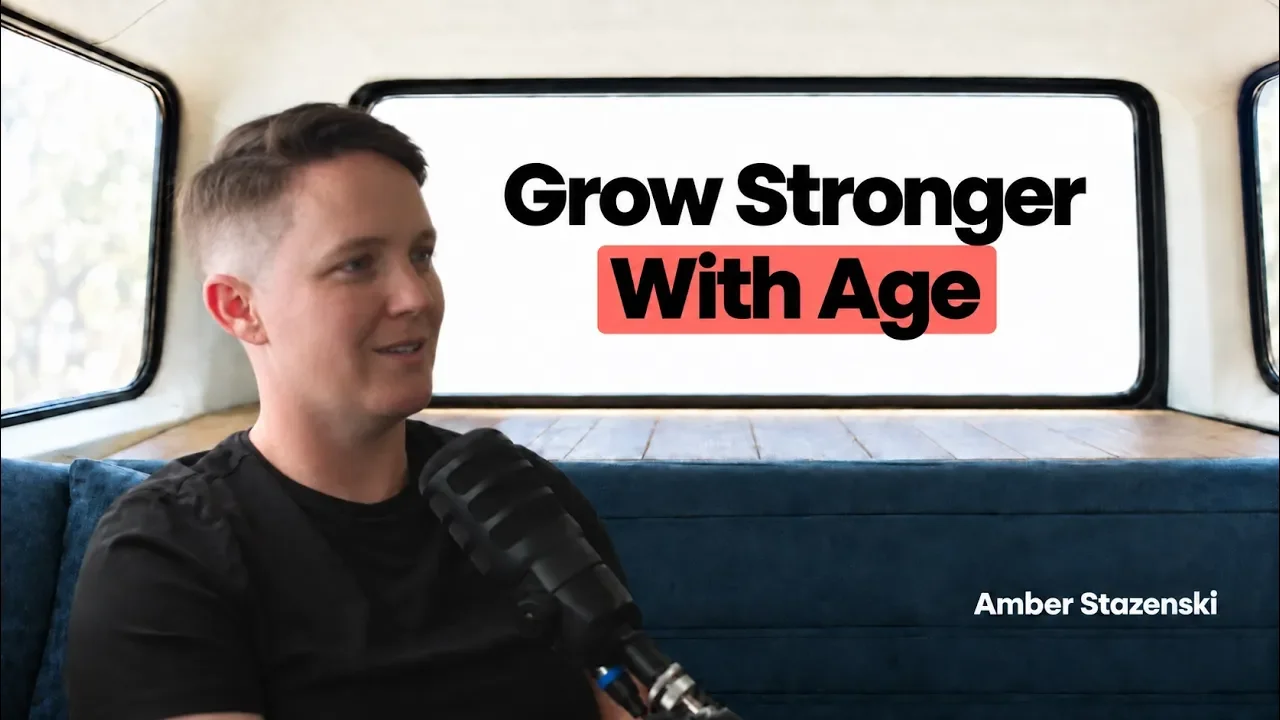
Speaking of homies. I pulled my homie Amber Stazenski into the RAE VAN during our Author X Event this past June for the latest episode and we talked about her whole thing: getting stronger with age. Not maintaining, not managing decline. Stronger. Her line is that aging doesn't make you weak, stopping does, and she's built her work around proving it.
She's exactly the kind of person this issue is about. Someone doing something I think is dope, who lights up when she talks about it, and who I wanted to put in front of you because of it.
Watch it here: https://rising-authors.com/podcast
Need support with your author brand?
If you want help turning who you actually are into an author brand people remember, this is what we do all day at Rising Authors.
Power Pack Pro, Boost, or Ultra. DM me or reply to this email and we'll talk.
Hussein