Sweat beads running down my forehead. Steps hitting the pavement while turning corners throughout the neighborhood.
I'm running in 90 degree weather at 7:30AM and I'm breathing heavy. I paused my watch to stop and write out my thoughts for this next newsletter.
Yeah, that's when fun ideas hit me, on runs and midway through heavy breathing.
I recently started running again. It has been off and on for a few months now, more off than on if I am honest. Last week I was on a jog and a Wu-Tang Clan song came up in the rotation. It got me thinking about an album they released that almost nobody has heard. In fact, no one will be able to hear it until the year 2103.
The album is called Once Upon a Time in Shaolin. It was recorded in secret between 2006 and 2013, mostly in Staten Island and Morocco. When it was finished, only one copy was pressed. It was placed in a hand engraved silver and nickel box, the kind you would expect to hold a museum piece, not a rap record.
The box is utterly beautiful and the fact that it was handcrafted and thought of as an art piece is all I need in my life. This immediately makes me want to share about it, share the photo, send it to someone who is a fan.
I believe why this works so well. Hell, I'm writing about this years later.
That's great marketing.
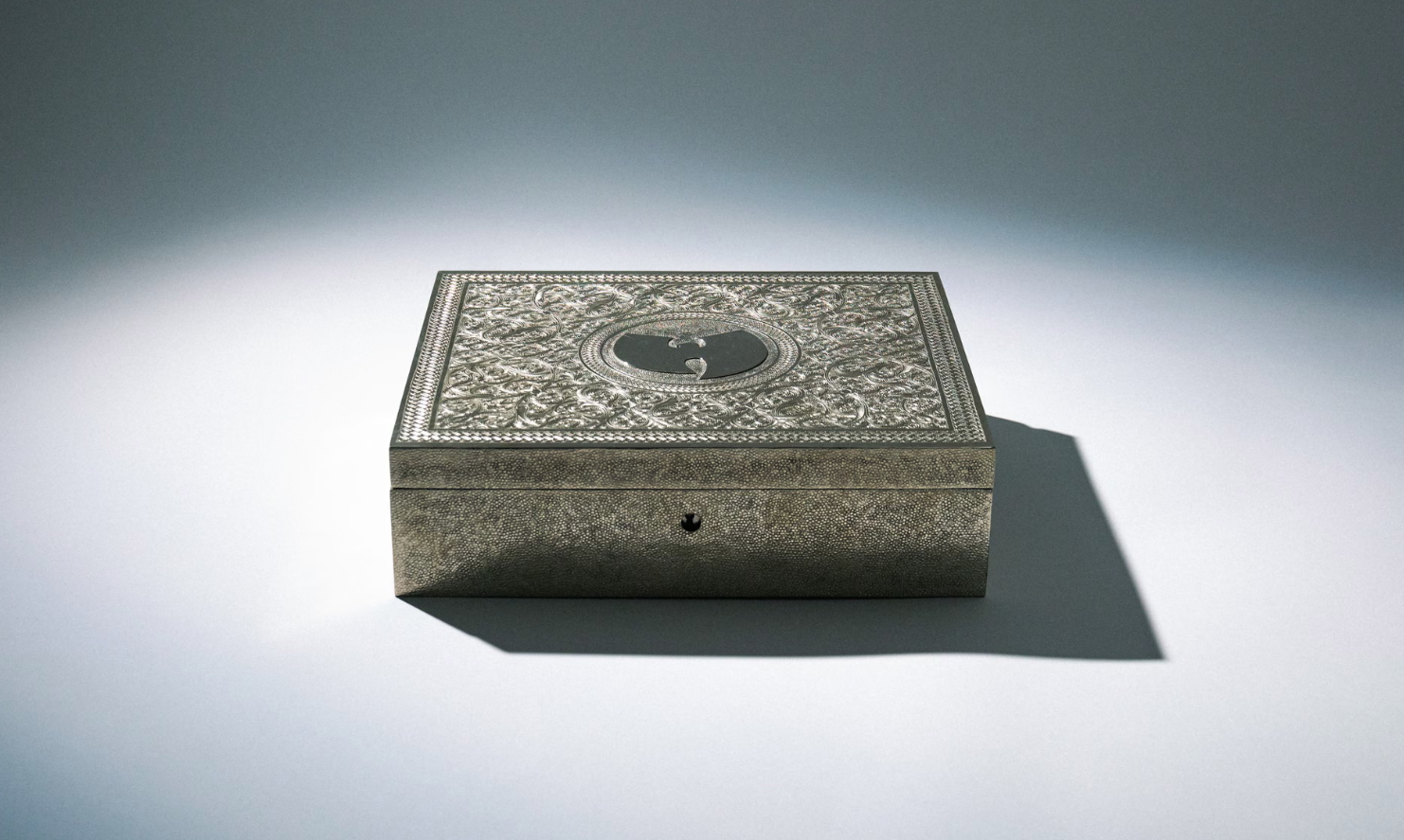
Once Upon a Time in Shaolin Album Box
In 2015, that single copy sold at auction for two million dollars to Martin Shkreli, the pharmaceutical executive who later went to prison for securities fraud. The sale came with a legal contract. The buyer could listen to it privately. He could host listening parties. What he could not do was release it, copy it, or sell the music commercially for 88 years. The album cannot be legally released to the public until October 8, 2103. Wu-Tang producers RZA and Cilvaringz called the whole project a 400-year-old Renaissance-style approach to music.
After Shkreli's conviction, the album was seized by the federal government as part of his asset forfeiture. It was later auctioned off again, this time to a group called PleasrDAO, for close to five million dollars. The contract still stands. Nobody alive today will legally hear the full album unless the terms change.
This all adds so much more hype around the whole project. Publicity is one hell of an ingredient added to an already awesome piece of work.
Now, to be clear. Wu-Tang is not my favorite group. Not even close. But this specific move is one of the smartest marketing plays I have studied in a long time.
Think about what they were up against in 2014 and 2015. Streaming had just taken over. Music was becoming infinite, disposable, and free. Every artist was fighting for attention inside an ocean of content. Wu-Tang did not fight that ocean. They stepped out of it entirely. One copy. No streaming. No download. A locked vault and a contract that outlives everyone reading this newsletter. That decision generated more headlines, documentaries, and conversation than most albums that actually got released.
Ok, this is the part where you're like "dude how does this apply to me as an author?"
Scarcity goes against everything authors think about when it comes to selling tons and tons of books. Same with Music.
In your case, you're not as famous as the Wu-Tang, which is fine, because this is a learning case study of how we can do things to stand out and do things a bit differnetly,
After all isn't that why you read this newsletter?
The scarcity was not decoration on top of the music. It was the entire message. Wu-Tang built a story so unusual that people had to talk about it, whether or not they ever heard a single track. The story did the marketing. Not the content.
Most authors do the opposite. You finish the book, you set up a launch week, you ask a few friends to share a post, and you hope the algorithm is kind to you that week. That is not a strategy. That is a wish.
I think about the man I saw on the news who walked from Philadelphia to California. His name is Isaiah Thomas, known online as HMBL Zay. He livestreamed the entire 3,000 mile walk, got hit by a car in Indiana and kept going anyway, and raised close to two hundred thousand dollars to build a trade school for kids in his community. Nobody assigned him that walk. He decided the story was worth more than a normal fundraising campaign, and he was right.
I don't see many authors thinking this way.
Maybe I am not looking hard enough. But when I look at what gets covered on the local news, what goes viral on YouTube, what makes people stop scrolling, it is rarely the safe move. It is the person who did something nobody expected them to do.
So Here Is What The Wu-Tang Taught Me About Marketing
My next book, This Is Author Marketing, comes out this November. I've been holding on to that one for a while, so I will share more in the weeks ahead!
This Wu-Tang concept has helped me think about things and changed how I am thinking about the launch. I will not walk you through every piece of what is coming. Some of it needs to stay a secret for now. But here are five things it gave me a lot to think about.
1. Make the scarcity real, not staged. Wu-Tang did not fake a deadline. The album really cannot be released until 2103. A countdown only works if people believe it is true. My pre-order window closes in November and it stays closed. No quiet extension in December.
2. Turn the object into the story. A silver box made people talk before a single song played. The physical edition of my book is not just going to show up in a plain mailer. The unboxing itself needs to be worth mentioning to somebody.
3. Give people a reason to keep watching. The Wu-Tang story did not end at the auction. It kept unfolding for a decade, through the Shkreli sale, the government seizure, the resale. Each new chapter kept people paying attention. My launch has stages built into it on purpose, so there is a reason to stay engaged past the first announcement.
4. Let the mystery carry some of the weight. I am not showing every card before November. People pay closer attention to something they cannot fully see yet than to something laid out in full on day one.
5. Make the payoff worth the wait. None of this works if the reward at the end is weak. The Wu-Tang stunt only holds up because the album is genuinely rare. My launch has a real grand prize behind it, not a gimmick. If the payoff is not real, the buildup falls apart.
Here is a challenge if you want to start thinking this way.
Grab a stack of post it notes.
Pick a wall somewhere, your office, your home, or just a corner nobody else notices.
Every time a wild idea pops into your head, write it down and stick it up. The wilder and the weirder the idea, the better. Do not filter yourself while you are doing this.
Not all of the ideas will go anywhere. Most of them will not. But one or two might end up being exactly the right move for you.
I have been leaning hard into experiential marketing lately, and it always starts in the same place. Ideation and experimentation. You cannot get to the interesting stuff without generating a stack of ideas first, including the bad ones.
What is your version of going against the grain. What is the move that makes someone raise an eyebrow and think, whoa, that is fun.
You don't need a silver box hand crafted in Morocco, I mean if you can swing it why not... You need a decision that is bold enough that someone else tells your story for you.
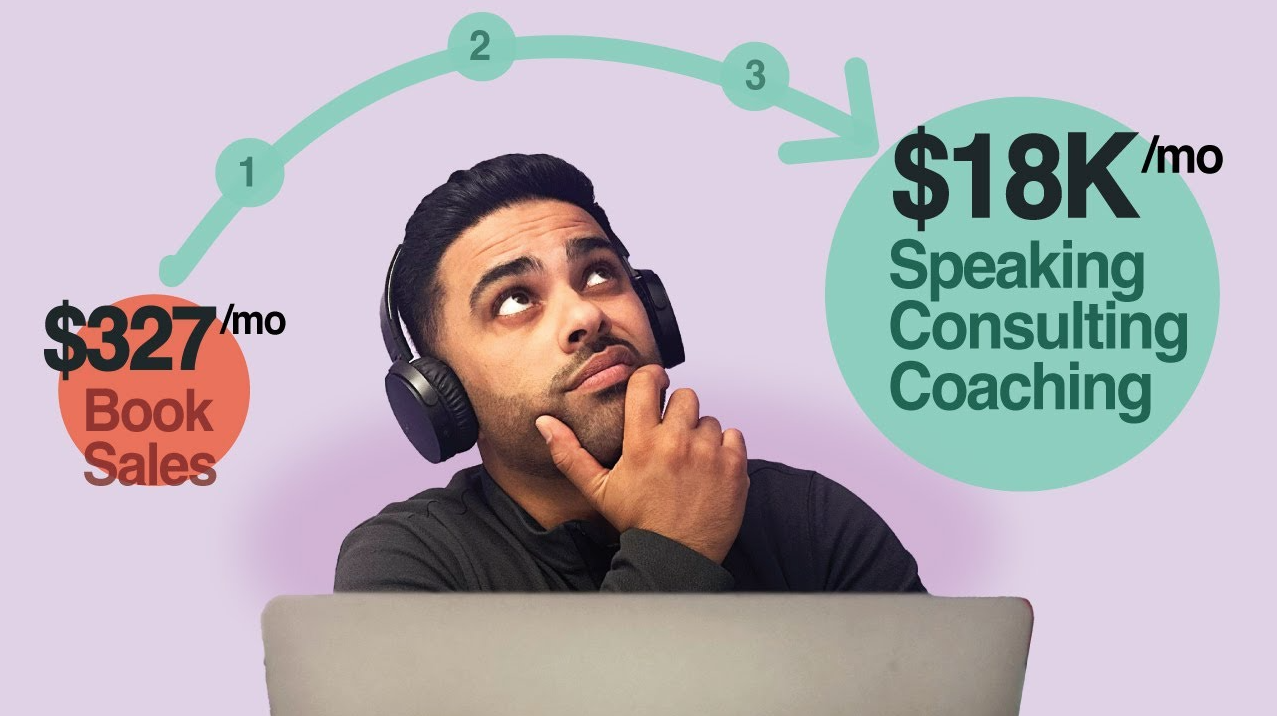
Here's a video I made a few years ago that honestly has been getting tons of views lately and I think it can add a lot of value for what you're up against. It's a step by step guide of you can think about your own expert brand.
I hope you enjoy that.
Hussein
P.S. If you want help building your own "attention plan" instead of another marketing plan, that's literally what we do at Rising Authors. Book a call here.