The attic above the pet store
I was in memory lane thinking about the hustle of going through college while talking with a friend over the phone. I thought about this show I used to watch and fell in love with.
I found it on Netflix and I rewatched all of How to Make It in America.
It's about two guys in New York trying to start a denim street wear brand with no money and no connections and a level of delusion that I recognized immediately, because when that show was on the air I was living my own version of it in Portland, and I have never seen anything on television get closer to what that actually felt like.
My version did not take place in New York. My version took place in the attic of a reptile pet store.
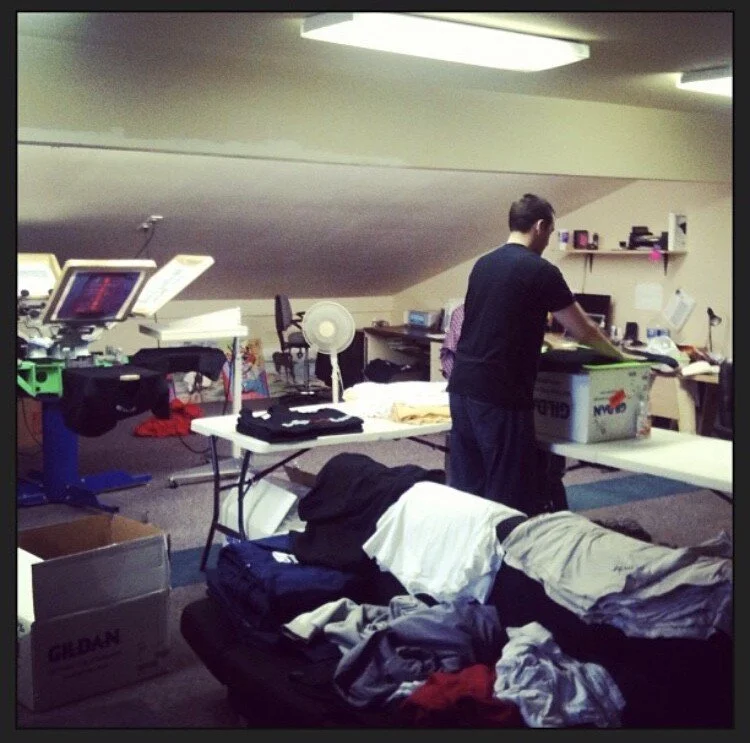
Max helping me print shirts in the attic shop
My print shop was a $400 a month attic above a store that sold snakes and lizards, and I spent a genuinely embarrassing amount of my mental energy that year quietly terrified that one of those things was going to find a gap in the floorboards and end up in my shop while I was pulling a squeegee across a screen. It was my second shop. The first one was a basement. So in my mind, going from a basement to an attic above a reptile store was a promotion, and I want you to understand that I meant that sincerely at the time.
I was in architecture school then. My friend Max and I were in the same program, and between studio and class and whatever else was due, I would drive back to that attic and try to figure out which design was going to pay my rent that month, because there was no other plan and no other money and no other version of the month that worked.
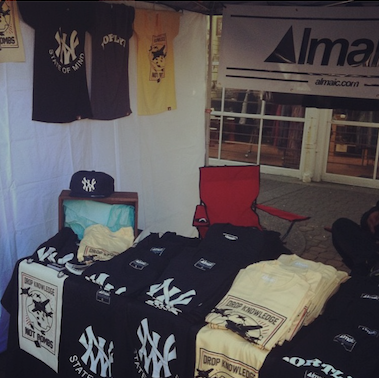
Saturday Market - Selling T shirts
The shirt I almost didn't print
I was selling t-shirts at the Portland Saturday Market, trying to build a little brand around what it felt like to actually live in Portland back when Portland was not yet a thing that people had opinions about, and I did not know it at the time but I was a few years early on that, which is a nice way of saying I was doing the right idea at the wrong moment and paying for the privilege.
I had made fifteen or so designs by then. The whole concept was like a "Brooklyn meets Portland vibe" the "NW State of Mind" and "Portlyn" T shirts were starting to grow and sell more and more over the weekends.
Some of them sold okay, a few here, a few there, enough to keep the lights on and keep me lying to myself about how it was going. None of them ever sold out. Not once.
Then one afternoon I sketched a joke. I drew the old RUN DMC logo, that heavy block type with the two bars above and below, except instead of RUN DMC it said RUN PDX.
It was not serious. It was a club banger, a throwaway, the kind of thing you sketch while you're procrastinating on the design you think is actually going to work. I almost didn't print it at all. I showed it to Max and asked him if it was even cool, half expecting him to tell me to get back to work, and he loved it immediately and told me to run it.
So I took every dollar I had and bought fifty blanks.
I want to slow down here for a second, because this is the part people always skip when they tell you these stories, and skipping it is what turns a real story into a highlight reel. Fifty shirts at twenty dollars each was rent, plus just enough left over to buy the next batch of blanks. If those shirts did not sell that weekend, I did not make rent that week. There was no cushion, there was no credit card with room on it, there was no parent I was going to call. There was a reptile store, a due date, and fifty blank shirts sitting in a box in an attic.
I was up at six in the morning that Saturday, tiny car packed to the roof with boxes and a tent and a folding table, driving down to the market early so I could get a decent spot before the people who had been doing this longer than me got theirs. I remember the exact quality of the fear on that drive, and it was not dramatic at all, it was just a low flat hum running underneath everything, the kind that still lets you do things with your hands while some back room of your brain quietly runs the math on what happens if today doesn't work.
I got my spot. Put up the tent, set the table, started hanging shirts, and I hung the RUN PDX one first because it was the one I was least sure about and I wanted to see it in daylight before anybody else did.
I had not even opened yet.
A guy came over while I was still setting up. Another vendor, somebody who worked the market too, and I need you to understand why that matters more than I can properly explain, because a customer telling you they like your thing is nice, but a peer telling you they want your thing is an entirely different signal coming from an entirely different part of the world. He pointed at it and said I need that right now, in a medium.
He paid, took it out of the bag, and put it on right there in front of me. And then he said, I'm sending everyone here who asks me where I got it.
I don't think that man has any idea what he did for me that morning. I had spent the whole week quietly convinced that I had just spent my last dollars printing a joke, and before the market had even opened its doors a stranger walked up and told me I was wrong.
About an hour later the market started to pop off, and I looked up from making change and there was a line at my table. A few people deep, standing there, waiting, for me. That had never happened. Not one time across fifteen designs. They were buying the RUN PDX shirt and they were picking up my other originals while they stood there, the same designs that had been sitting in that box for months getting politely ignored, and I understood something in that moment that took me years to be able to say out loud, which is that the one thing that finally hits does not just sell itself, it reaches back and drags everything else you ever made into the light with it.
By lunch I had a bit over a thousand dollars in cash in my pocket.
Hard cash. Crumpled, folded over, stuffed in deep, more money than I had ever held at one time in my life up to that point. Rent was covered. Next week was covered. The next batch of blanks was covered. And that low flat hum that had been running underneath every single thing I did for months just went silent.
I gave Max a hundred bucks on the spot for helping me, and I didn't think about it for even a second. He was the one who told me to print it when I was standing there ready to talk myself out of it, and I wanted him to have some of it in his hand while the thing was still happening, not later, not as a story we told each other years afterward.
Then I drove straight to the blank t-shirt warehouse and bought fifty more.
By the end of that day I had exactly one RUN PDX shirt left in the world and it was the one on my back. People kept asking me to sell it off of me. Not asking whether I had more in the box, asking for the one I was wearing. They wanted to know if I would be back tomorrow. They wanted to know if I would be back next weekend.
It was on.
I printed all fifty of those blanks alone in the attic that night, screen after screen, hands cramping, and came back Sunday morning with a full box and sold out again, and by then people were coming up asking if I made it in other colors, which is a question nobody had ever once asked me about anything I had made.
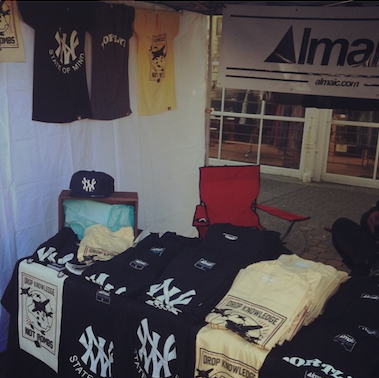
RUN PDX T shirt in my second shop
That one shirt, design number sixteen, the joke, the one I almost didn't make, went on to bring in a few thousand dollars a month and carried me while I finished school.
And then I got fined by the NBA and lost the print shop, but that is a whole other newsletter and I promise I will actually write it.
What that show got right, and what your launch is missing
Here is why I went back to that series in the first place, and why I'm telling you all of this instead of giving you a tactic this week.
How to Make It in America was not a good show because of the wins. It was a good show because of everything in between the wins. It showed the rejection, and the self sabotage, and the stupid argument with your business partner that sets you back three weeks, and the connection that almost happened and then didn't, and the favor you had to swallow your pride to ask for, and the sample that came back wrong after you already spent the money. And then, every so often, it showed the yes. The moment the thing actually works and you cannot sit down and you don't know who to call.
It was a living documentary for anyone who has ever wanted to build something with their own name attached to it, and it made people feel seen in a way that almost nothing else on television was doing at the time.
I know that because a stranger once walked up to Max and me and said, out loud, you two remind me of the guys from How to Make It in America. That is not a small thing. Somebody watched two fictional guys grind through the exact texture of what we were living, and then recognized it in us on a sidewalk. That recognition, that feeling of this person gets what I'm going through, is the most valuable thing you can possibly create for another human being, and most of us are throwing it directly in the garbage every single week.
So which one is yours
Does your book, your launch, your author business feel like a show, or does it feel like a post?
A post is a milestone. Cover reveal. Preorder link. So excited to finally announce. Launch day. Bestseller badge held up next to your face. And then nothing at all for four months until the next thing worth announcing shows up.
A show is the whole season. It's episode three where the printer gets your cover color wrong and you have to decide whether you can live with it. It's the chapter you deleted at midnight and then went and got out of the trash the next morning. It's the podcast episode that got eleven downloads and nine of them were you checking if it uploaded. It's the pitch that got ignored, the launch that undersold, the day something finally clicked and you had nobody to tell.
People fall in love with a journey they were allowed to ride along on, and those are two completely different products.
When you only post the wins, you are asking a room full of strangers to applaud for a stranger, and strangers don't buy books. When you document the middle, the mess, the trying, the failing, the figuring it out in public, you are asking people to come with you, and the people who come with you are the ones who show up on launch day without being asked twice.
Your move this week
So here is the work, and it is not a tactic, and you are going to have to actually decide something.
Pick one thing you are working on right now that nobody has seen yet. The chapter that isn't going well. The launch plan you're not sure about. The idea you think is too small or too weird or too unfinished to talk about. Then share it this week, in the middle, before you know how it ends. Not the announcement, not the polished version, not the after photo. The part where you're still in it.
Say what you're trying, say what you're scared of, say what you don't know yet.
Author X Talks
My amazing friend Andrew Tracy Ceperley, PCC was one of the first to sign up to our last Author X event. He did this talk that I just love about how to become a wisdom worker while being the calm in a storm. I think you will love this Author X talk.
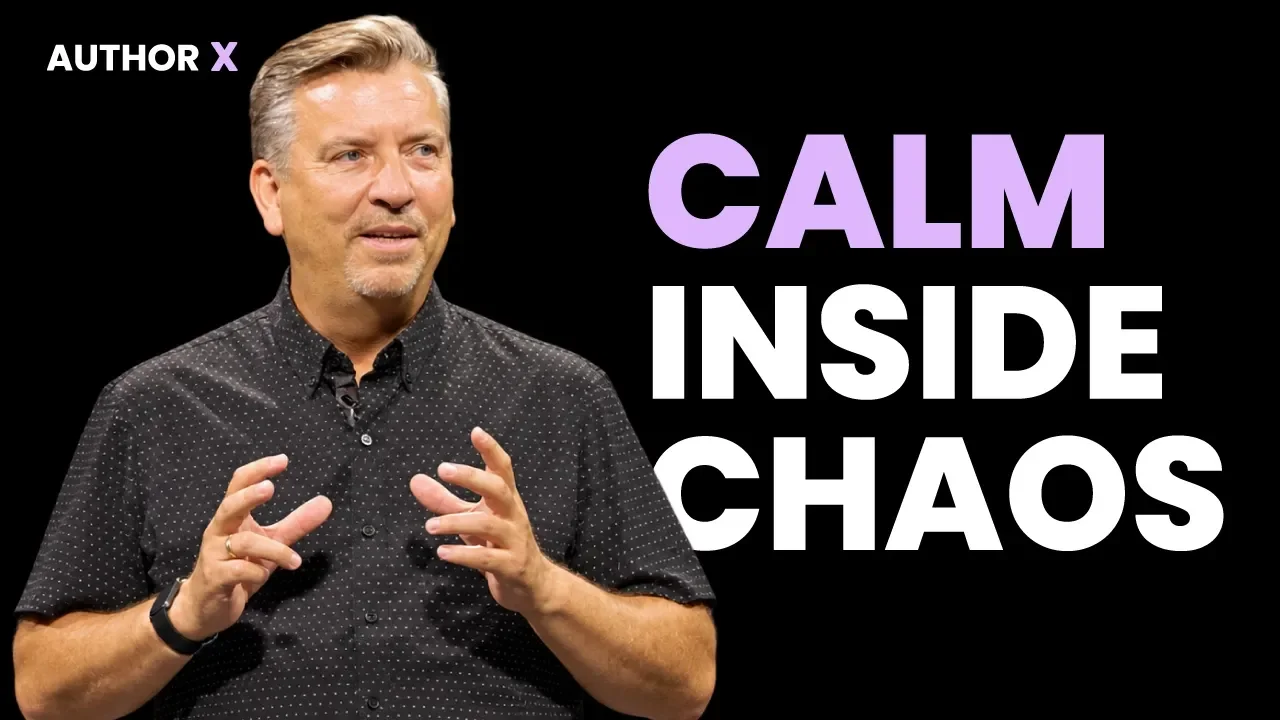
Andrew Ceperley Giving his Author X Talk
Another thing Andy is doing is passing it forward. So after the Author X event he said he got so much value out of the event that he wanted to pay more. I was blown away. So we decided to make a pay it forward opportunity for someone who wants to attend Author X and needs some financial assistance. We will be offering this in a fun way for our next event. Stay tuned in for that
Thank you Andy!
Lastly, our latest episode of the Rising Author Podcast is with R. Karl Hebenstreit, PhD, PCC, PHR You're going to love the deep dive on how he leverages his books as an author to opportunities like speaking at TEDx and Consulting.

Enjoy the episodes and thank you for all your support!
If you need help with your author marketing send me a message
Hussein