In 2011, a young writer named Austin Kleon was invited to speak to college students in upstate New York.
He had no grand plan. He stayed up late the night before, pulling ten ideas from old notebooks and blog posts. Ten things he wished someone had told him about being creative.
The talk went fine. Then he flew home to Texas and did something simple. He turned his slides and notes into a blog post and published it.
It spread across the internet almost overnight.
That post became Steal Like an Artist. It landed him a book deal and became a New York Times bestseller. He went on to write two more books in the same series.
Here’s the part most people skip when they tell this story. Kleon had been posting his work online for years before that night. He already had readers. The viral post didn’t come out of nowhere. It came out of years of showing up.
Most blog posts don’t do that. Most blog posts get read by a handful of people and then disappear. You can write something brilliant, hit publish, and hear nothing back.
That’s not a reason to stop sharing. It’s a reason to rethink how you share.
Video Changes the Game
We’re living through a strange moment. People are tired of being sold to. Every feed is full of offers, launches, and countdown timers.
So what are people actually looking for? Someone they can connect with. Someone who helps them without an angle. Someone who gives so much that, if they ever decide to buy, it’s because they want to. Not because they were cornered.
Text can do that. Video does it faster.
On video, people see your face. They hear your voice. They catch the pause before you tell the hard part of the story. Trust gets built in seconds instead of months. For an author, that’s everything. Your book is your thinking. Video lets people meet the person behind the thinking before they ever open a page.
What a Format Actually Is
Most authors hear “make videos” and freeze. They picture a studio, a script, and a ring light they don’t own.
Pick a format.
A format is a repeatable container for your content. Same setting, same shape, same rhythm, different story every time. Your audience learns what to expect, and you stop starting from a blank page every day.
A few examples:
You at your desk, answering one reader question per video.
You on a walk, sharing one idea from your book in under a minute.
You reading one line from your manuscript, then telling the story behind it.
You in the car after a client call, sharing the lesson while it’s still fresh.
The format does half the work. You just show up and fill it.
Don’t Overthink It. Experiment.
Your first format probably won’t be your last. That’s fine.
Make five videos in one format. Watch what people respond to. Notice which ones felt natural to record and which ones felt forced. Then adjust.
Nobody gets it right on the first try. The authors who win on video aren’t the most polished. They’re the ones who kept experimenting long enough to find the thing that felt like them.
The Author I’ve Been Watching Like a Hawk
If you want to see this done well, look at Charlie Rocket.
His story is wild. He was a music manager who helped build the careers of 2 Chainz and Travis Porter. At the height of that success he was seriously overweight and was diagnosed with a brain tumor. He walked away from the music business to chase his childhood dream of becoming an athlete.
He lost more than 100 pounds. He ran marathons. He finished an Ironman. He made his own Nike-style commercial and ended up in Nike’s “Dream Crazy” campaign. Then he started a foundation that goes city to city making strangers’ dreams come true.
Now he has a book coming. It’s called The Winning Streak.
What I can’t stop watching is how he’s building anticipation for it.
He sits on a bench and tells wild stories about breaking through. That’s the format. Same bench, same energy, a different story each time. On Instagram and YouTube, it’s clean, simple, and completely him. Nothing about it feels like a sales pitch. It feels like a guy you’d want to sit next to.
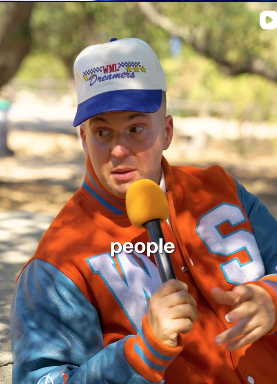
And every story points back to the book without begging you to buy it. By the time it launches, people won’t be hearing about it for the first time. They’ll have been sitting on that bench with him for months.
That’s the whole lesson. He’s not marketing a book. He’s inviting people into the world the book came from.
Most authors feel like salespeople because they only show up when they want something.
The book launches. They post about it. They post again. They ask for reviews. Then they go quiet for three months.
Readers feel that. You feel it too, which is why it feels gross.
Kleon and Charlie flip it. You stop talking about your book and start talking from it.
Share the ideas, not the product. Your book has dozens of insights. Each one is a video, a post, or an email.
Share the process. What you learned writing it. What you cut. What surprised you.
Answer questions your reader is already asking. Your book exists because you solved a problem. Talk about the problem.
Mention the book like a source, not a pitch. “I wrote a whole chapter on this” lands differently than “Buy now.”
Give it a home. A format makes it easy for you to keep going and easy for people to recognize you.
When you lead with value, people go looking for the book on their own. That’s the difference between selling and being found.
Do This Week
Pick one format. Keep it simple. A chair, a walk, a bench, your kitchen table.
Open your book and pick three ideas. Record three short videos in that same format, one idea each. Under 90 seconds. No script, just a few notes.
Post one. Then post the next one a few days later. Don’t judge the results yet. You’re not trying to go viral. You’re trying to find your bench.
On the Podcast
This week I sat down with Ivan Carl, author of the thriller The Equation. He tried to solve contentment like a math problem, then wrote a novel about it. His biggest warning for authors: don’t wait until after you publish to think about how readers will find you.
Need Support?
If you want help finding a video format that fits you and your book, reply to this email. Message me and I'll help you figure out your bench.
Hussein